
RJ45 Connectivity: The Fascinating History Behind the RJ45 Connector
The RJ45 connector is a small but mighty piece of technology that has played a significant role in shaping our modern digital world. From connecting our computers to local area networks (LANs) to facilitating high-speed internet connections, this unassuming connector has revolutionized the way we communicate and share information.
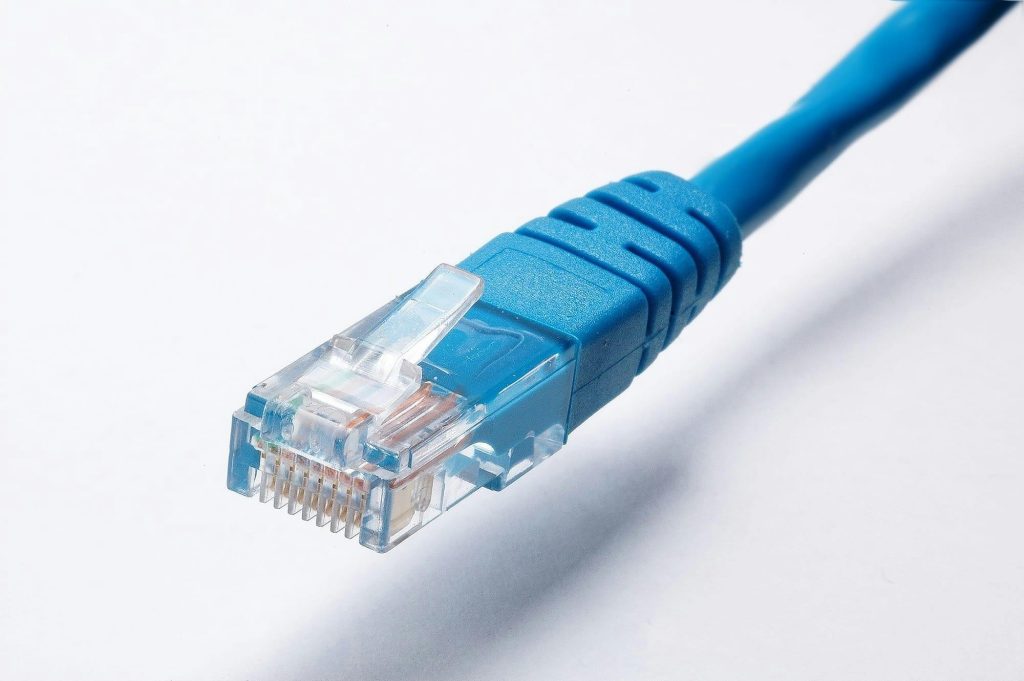
But have you ever wondered about the intriguing history behind the RJ45 connector? How did it evolve over time to become the standardized connector we know today? In this article, we will dive deep into the fascinating journey of the RJ45 connector, tracing its origins back to its inception and exploring the various developments and improvements along the way.
We’ll uncover the key players involved in its creation, the advancements in technology that influenced its design, and the impact it has had on the telecommunications industry.
Stay tuned as we uncover the secrets behind this small yet mighty connector and uncover how it has shaped the way we connect and communicate in the digital age.
The Origins of the RJ45 Connector
The story of the RJ45 connector begins with the emergence of Ethernet, a networking technology that revolutionized the way computers communicated with each other. In the early days of computing, various connectors were used to link computers together, but there was a need for a standardized connector that could support high-speed data transfer. This led to the creation of the RJ45 connector, which was designed to work specifically with Ethernet technology.
The term “RJ45” stands for Registered Jack 45, a designation used to identify the connector’s wiring pattern. The RJ45 connector was developed to replace its predecessor, the RJ11 connector, which was commonly used for telephone connections. With its ability to support multiple data channels, the RJ45 connector quickly became the go-to choice for networking applications.
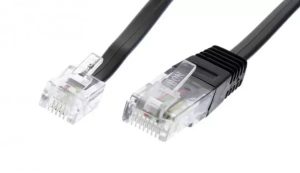
As networking technology continued to advance, the RJ45 connector underwent several iterations to meet the growing demands of high-speed data transmission. Today, the RJ45 connector is a ubiquitous sight in offices, homes, and data centers around the world, serving as the primary means of connecting devices to local area networks and the internet.
Ethernet Technology & The RJ45
Ethernet technology played a crucial role in shaping the evolution of the RJ45 connector. Developed in the 1970s by Bob Metcalfe and his team at Xerox PARC, Ethernet was designed to provide a reliable and efficient way for computers to communicate over a local area network. The early versions of Ethernet used coaxial cables and bulky connectors to transmit data, but as technology progressed, the need for a more streamlined and versatile connector became apparent.
The introduction of twisted-pair cabling marked a significant milestone in the development of Ethernet technology. This new type of cabling, which consisted of pairs of insulated copper wires twisted together, offered improved performance and reliability compared to coaxial cables. The RJ45 connector was specifically designed to work with twisted-pair cabling, providing a secure and efficient connection for Ethernet networks.

With the adoption of twisted-pair cabling and the RJ45 connector, Ethernet technology experienced rapid growth and became the standard for networking in the 1980s and beyond. The RJ45 connector’s compatibility with Ethernet protocols and its ability to support high-speed data transfer made it an essential component in the world of networking, paving the way for the widespread adoption of local area networks and the internet.
The Standardization of the RJ45 Connector
The standardization of the RJ45 connector was a crucial step in ensuring compatibility and interoperability across different networking devices and systems. In the early days of networking, there was a lack of consistency in connector designs, leading to compatibility issues and inefficiencies in data transmission. To address this challenge, industry organizations and standards bodies worked together to establish a set of specifications for the RJ45 connector.
One of the key standards that helped shape the RJ45 connector’s design was the TIA/EIA-568 standard, which defined the wiring schemes and pin assignments for Ethernet connectivity. This standardization ensured that devices from different manufacturers could communicate effectively over Ethernet networks, regardless of their specific configurations. By adhering to the TIA/EIA-568 standard, manufacturers could guarantee that their RJ45 connectors would work seamlessly with other compliant devices.
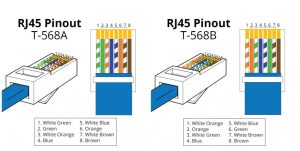
In addition to the TIA/EIA-568 standard, international organizations such as the International Organization for Standardization (ISO) and the Institute of Electrical and Electronics Engineers (IEEE) also played a role in establishing guidelines for the RJ45 connector. These standards helped create a unified framework for Ethernet connectivity, laying the foundation for the widespread adoption of the RJ45 connector in networking applications worldwide.
The Evolution of the RJ45 Connector
The RJ45 connector has evolved significantly since its inception, adapting to the changing needs of networking technology and the growing demands for faster and more reliable data transmission. Over the years, engineers and manufacturers have introduced various improvements to the RJ45 connector to enhance its performance and usability.
One of the key advancements in the evolution of the RJ45 connector was the introduction of the Gigabit Ethernet standard, which allowed for data transfer speeds of up to 1 gigabit per second. To support these higher speeds, enhancements were made to the RJ45 connector’s design, including improved shielding and contact configurations. These upgrades enabled the RJ45 connector to meet the demands of high-bandwidth applications and ensure seamless connectivity in modern networks.
Another important development in the evolution of the RJ45 connector was the introduction of Power over Ethernet (PoE) technology. PoE allows devices to receive power and data over the same Ethernet cable, eliminating the need for separate power sources. This innovation made it easier to deploy devices such as IP cameras, wireless access points, and VoIP phones, simplifying network installations and reducing costs.
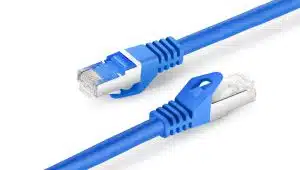
Most networks today use classifications such as Cat5e, Cat6 or Cat6a to define the speed that the cable is capable of carrying. Many networks today also require shielded cabling to protect their networks from electro-magnetic interference.
Common Uses of the RJ45 Connector
The RJ45 connector is a versatile component that finds application in a wide range of networking and communication scenarios. One of the most common uses of the RJ45 connector is in connecting computers, routers, switches, and other network devices to local area networks (LANs) and the internet. The RJ45 connector’s compatibility with Ethernet technology makes it an ideal choice for establishing high-speed data connections in homes, offices, and data centers.
In addition to traditional networking applications, the RJ45 connector is also used in various industrial and commercial settings. For example, the RJ45 connector is frequently employed in surveillance systems to connect IP cameras and network video recorders, enabling remote monitoring and recording of video footage. The RJ45 connector’s reliability and ease of use make it a preferred choice for integrating security cameras into networked environments.

Another common use of the RJ45 connector is in telecommunications applications, where it is used to connect telephones, fax machines, and other communication devices to telephone networks. The RJ45 connector’s compatibility with twisted-pair cabling and its ability to support multiple data channels make it well-suited for transmitting voice and data signals over telephone lines. Whether you’re making a phone call or sending a fax, chances are that the RJ45 connector is playing a role in facilitating communication.
Terminating RJ45 Connectors
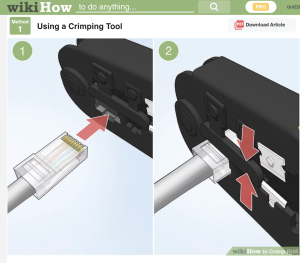
Terminating Cat5e, Cat6 and Cat6a cable to RJ45 connectors can be a bit tricky. One needs a special crimp tool as well as a very sharp pair of wire cutters. Once connectors are terminated they need to be tested for continuity as well as to show that they pass the characteristics of Cat5e, Cat6 or Cat6a requirements. This article does a good job showing how to terminate RJ45 plugs:
Bulkhead Jacks Used With RJ45 Connectors
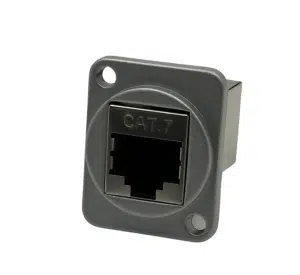
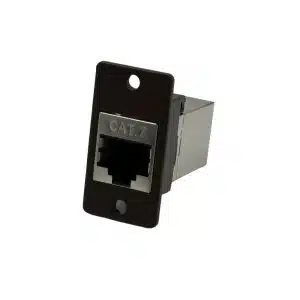
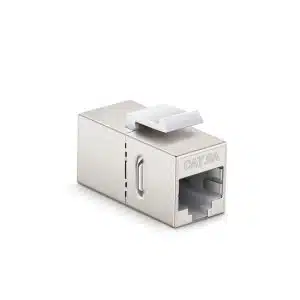
Various bulkhead jacks and rack panels are used to complete RJ45 connections throughout a network. Bulkhead connectors can be used to allow two cables terminated by RJ45 to pass through a wall or piece of equipment:
How to Test Your RJ45 Connectors
Once your RJ45’s are terminated and connected throughout your network it is crucial to do proper testing to check for the performance that is needed within the network. This article explains the procedures for testing RJ45 networks as well as explains the common testing equipment that is required to complete the tests.
The Future of the RJ45 Connector
As we look to the future, the RJ45 connector is likely to remain a key component in networking infrastructure for years to come. While emerging technologies such as fiber optics and wireless connectivity offer alternatives to traditional copper-based Ethernet connections, the RJ45 connector’s proven reliability and compatibility make it a preferred choice for many applications.
One area where the RJ45 connector is expected to continue evolving is in the realm of high-speed networking. With the demand for faster data transfer speeds increasing, enhancements to the RJ45 connector’s design, such as improved shielding and contact configurations, will be essential to support the next generation of Ethernet technology. These advancements will enable the RJ45 connector to meet the growing demands of data-intensive applications and ensure seamless connectivity in modern networks.
Another trend that is likely to shape the future of the RJ45 connector is the continued adoption of Power over Ethernet (PoE) technology. As more devices become network-enabled and require power and data connectivity, the convenience and cost savings offered by PoE-compatible RJ45 connectors will drive their widespread use in various industries. From smart lighting systems to IoT devices, PoE technology will play a significant role in shaping the evolution of the RJ45 connector.
In conclusion, the RJ45 connector has a rich history and a promising future as a vital component in networking technology. From its humble beginnings in the early days of Ethernet to its current status as a ubiquitous connector in modern networks, the RJ45 connector has proven to be a reliable and adaptable solution for connecting devices and transmitting data. As technology continues to evolve, the RJ45 connector will undoubtedly continue to play a significant role in shaping the way we connect and communicate in the digital age.